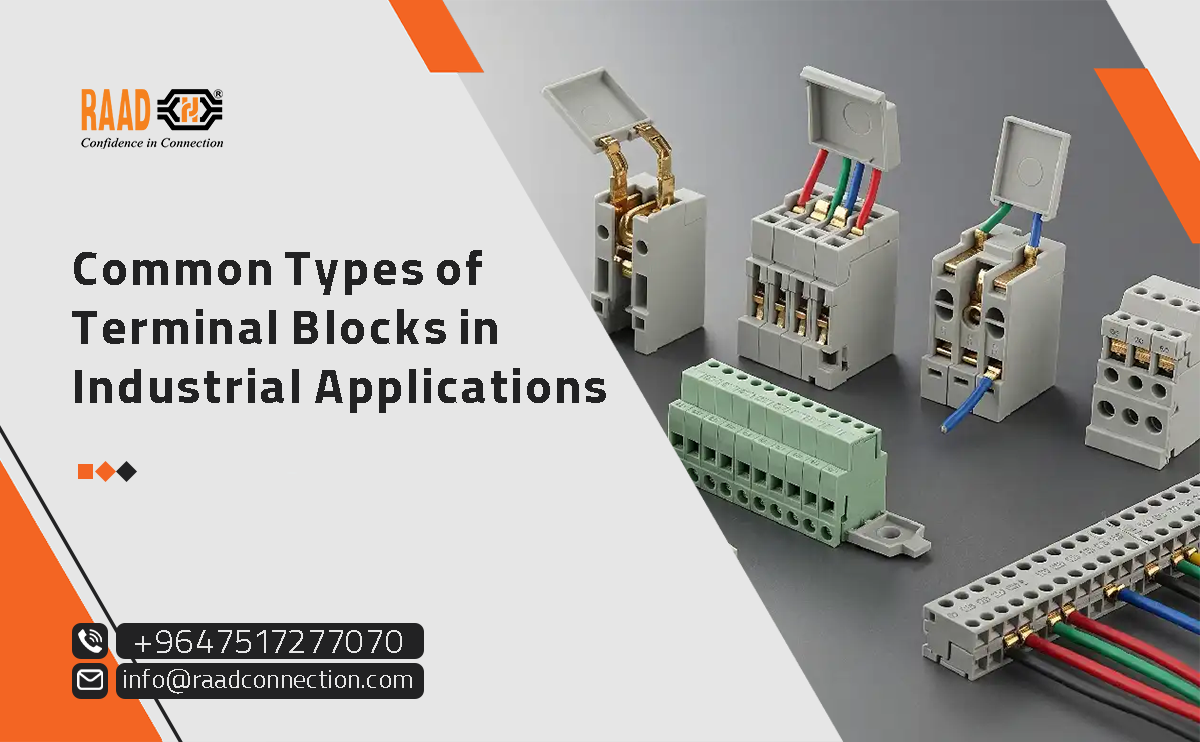
Blog
Title: A Complete Guide to Common Types of Terminal Blocks in Industrial Applications
In industrial electrical systems, reliability starts at the connection points. Terminal blocks may seem like small components, but they play a critical role in ensuring safe, organized, and durable electrical connections. Choosing the right type of terminal block can significantly improve system performance, reduce maintenance time, and enhance overall safety.
This guide explores the most common types of terminal blocks used in industrial environments, along with their advantages, disadvantages, and ideal applications.
What Are Terminal Blocks and Why Are They Important?
Terminal blocks are connectors that securely join two or more electrical wires. They are widely used in control panels, automation systems, and power distribution setups.
Key Benefits of Using Terminal Blocks
- Organized and structured wiring
- Improved safety and insulation
- Easier maintenance and troubleshooting
- Reliable connections in demanding environments
Without terminal blocks, managing complex wiring systems would be inefficient and risky.
Common Types of Terminal Blocks
Different applications require different connection methods. Below are the most widely used types in industrial settings.
Screw Terminal Blocks
Screw terminal blocks are among the oldest and most commonly used types. They use a screw mechanism to clamp the wire in place.
Advantages
- Strong and secure connection
- Suitable for high-current applications
- Widely available and cost-effective
Disadvantages
- Requires tools for installation
- May loosen over time due to vibration
- Regular maintenance may be needed
Best Applications
- Heavy machinery
- Power distribution panels
- Environments with stable conditions
Spring Clamp Terminal Blocks
Spring clamp (or tension clamp) terminal blocks use a spring mechanism to hold the wire securely.
Advantages
- Vibration-resistant connection
- Maintenance-free operation
- Faster installation compared to screw types
Disadvantages
- Slightly higher cost
- May require special tools depending on design
Best Applications
- High-vibration environments
- Automation systems
- Railway and transportation industries
Push-in Terminal Blocks
Push-in terminal blocks are designed for quick and tool-free wiring. Wires can be inserted directly into the terminal.
Advantages
- Extremely fast installation
- No tools required
- Compact and space-saving design
Disadvantages
- Typically suited for smaller wire sizes
- Less flexibility for rewiring
Best Applications
- Control panels with limited space
- Mass production environments
- Modern automation systems
Barrier Terminal Blocks
Barrier terminal blocks feature a physical barrier between connection points, providing additional safety.
Advantages
- Enhanced protection against short circuits
- Clear separation between connections
- Durable and robust design
Disadvantages
- Bulkier compared to other types
- Slower installation process
Best Applications
- High-voltage systems
- Industrial power supplies
- Applications requiring extra safety measures
Comparing Terminal Block Types
Choosing the right terminal block depends on your specific needs. Here’s a quick comparison:
| Type | Installation Speed | Vibration Resistance | Maintenance | Cost |
|---|---|---|---|---|
| Screw | Medium | Low | Medium | Low |
| Spring Clamp | Fast | High | Low | Medium |
| Push-in | Very Fast | Medium | Low | Medium |
| Barrier | Slow | High | Low | Medium |
How to Choose the Right Terminal Block
Selecting the right terminal block is not just about preference—it’s about performance and safety.
Factors to Consider
1. Electrical Requirements
- Current and voltage ratings
- Wire size compatibility
2. Environmental Conditions
- Temperature
- Humidity
- Vibration levels
3. Installation Needs
- Available space in the panel
- Speed of installation
- Accessibility for maintenance
4. Safety Standards
Ensure the terminal blocks comply with relevant international standards to guarantee reliability and protection.
Common Mistakes to Avoid
Even experienced professionals can make errors when selecting terminal blocks.
Avoid These Pitfalls
- Choosing based only on price
- Ignoring environmental conditions
- Using the wrong wire size
- Overlooking future expansion needs
A small mistake at the connection point can lead to major system failures.
The Future of Terminal Block Technology
Industrial components are evolving to meet modern demands for efficiency and automation.
Emerging Trends
- Tool-free and faster connection systems
- Smart terminal blocks with monitoring capabilities
- More compact and modular designs
- Improved materials for higher durability
These innovations are helping industries reduce downtime and improve productivity.